
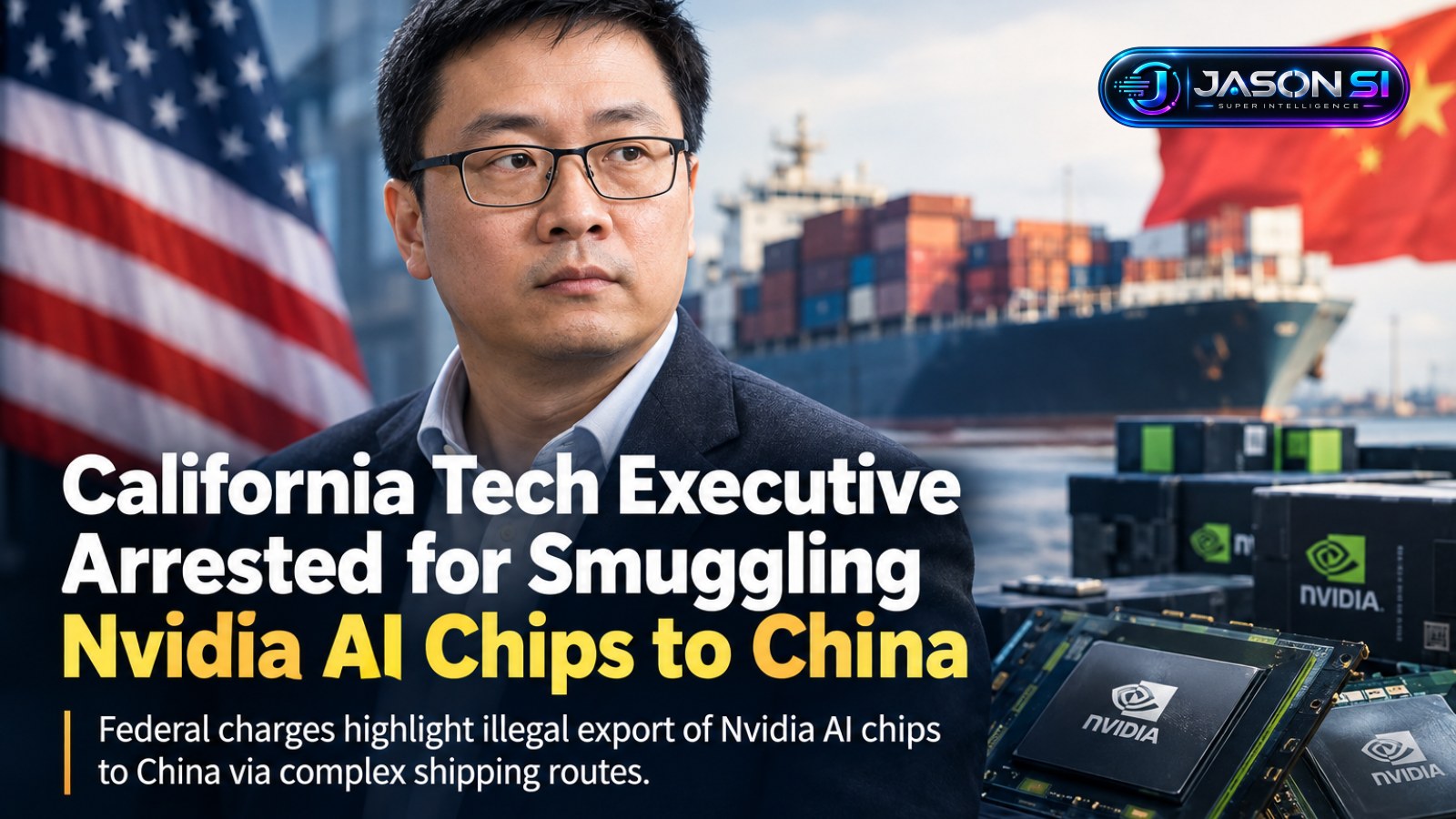
Greg Lui, owner of Earthmade Computer Inc., a technology company based in California, has been arrested on federal charges related to the illegal export of Nvidia AI chips to China. The case highlights ongoing efforts by U.S. authorities to control the flow of advanced AI technology amid geopolitical tensions.
Details of the Alleged Smuggling Scheme
According to the U.S. Justice Department, Lui is charged with conspiracy to violate the Export Control Reform Act, outbound smuggling, and conspiracy to commit money laundering. The indictment alleges that between 2023 and 2024, Lui and unnamed co-conspirators purchased export-controlled servers containing Nvidia GPUs and shipped them to China without the necessary U.S. Commerce Department licenses.
To bypass export controls, the scheme reportedly involved submitting false paperwork to U.S. manufacturers about the final destination of the equipment. The servers were first shipped to Malaysia and Singapore—countries that do not require export licenses for such purchases—and then illegally re-exported to China. Earthmade allegedly received over $176 million from two Malaysian shipping companies as part of this operation.
One documented transaction involved 27 servers containing Nvidia H100 GPUs valued at approximately $7.6 million, shipped from Los Angeles to Kuala Lumpur before being sent to China.
Implications for AI Industry and Business Workflows
This arrest is part of a broader crackdown on the unauthorised transfer of advanced AI hardware to China, reflecting increasing U.S. regulatory scrutiny. Other related cases include investigations into logistics firms and executives implicated in similar schemes.
For businesses and technology professionals, this development underscores the importance of compliance with export controls and licensing requirements when dealing with sensitive AI technologies. Companies involved in AI hardware distribution must ensure transparent supply chains and accurate documentation to avoid legal risks.
- Export controls on AI chips are tightening globally, affecting supply chains.
- False documentation and transshipment through third countries are common tactics in smuggling schemes.
- Regulatory enforcement is increasing, with severe penalties including long prison sentences.
- Businesses should audit workflows and supplier practices to maintain compliance.
While this case involves high-value technology and international trade, the practical effect on everyday users is indirect. However, the restriction of AI chip exports could influence the pace of AI development and availability in certain markets, potentially impacting global innovation dynamics.
For organisations navigating AI adoption, understanding the legal landscape around hardware procurement is essential. JASON SI offers resources and solutions to help businesses manage AI technology workflows securely and compliantly. Learn more at https://jason-si.com.
Scope and Implementation Disclaimer: This article is based on publicly available information from legal indictments and news reports as of early 2026. It does not provide legal advice or confirm guilt. Readers should consult official sources and legal counsel for specific cases.