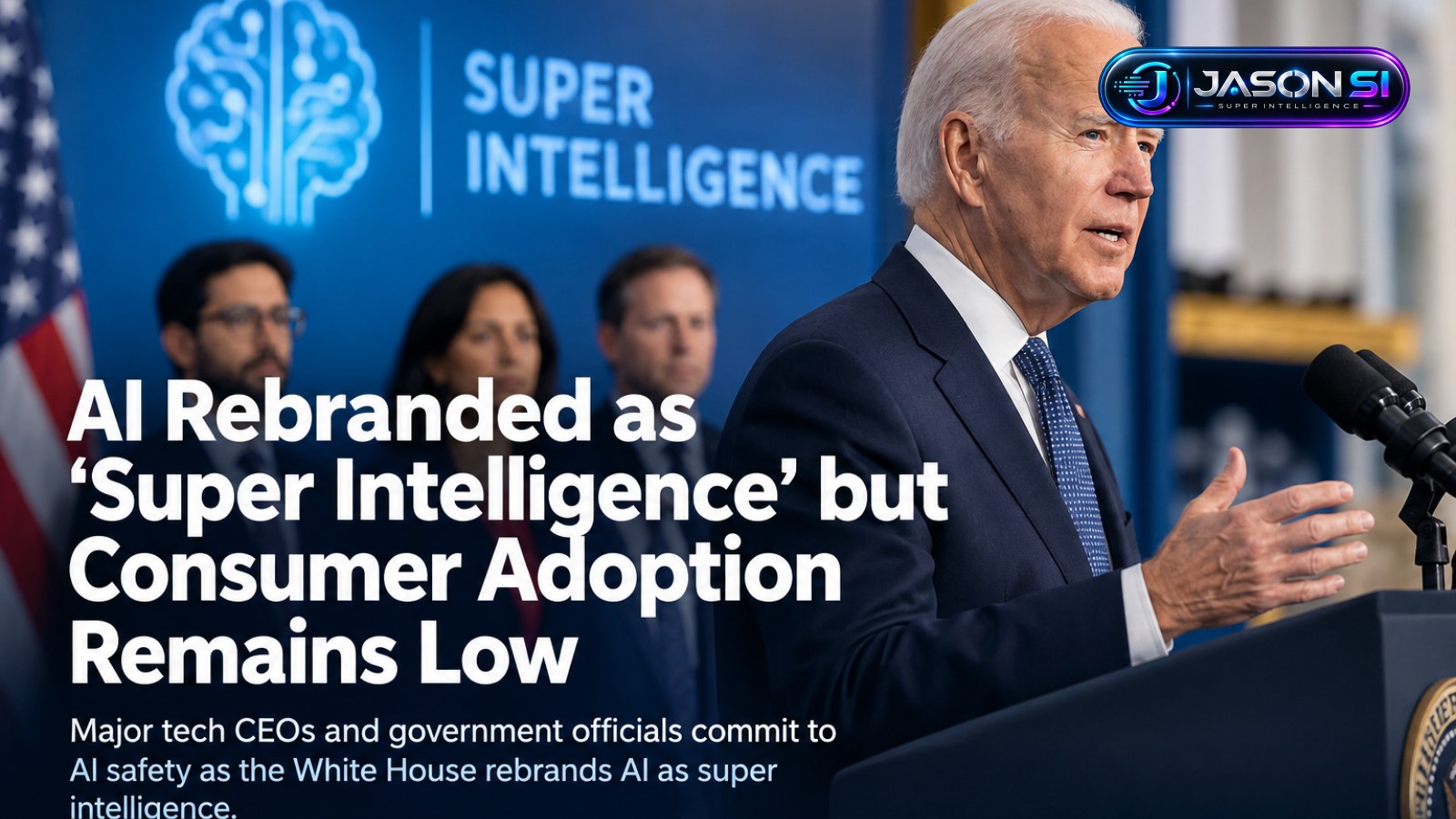
Recent developments in artificial intelligence (AI) signal a significant shift in how the technology is positioned and perceived. The White House has rebranded AI as “super intelligence,” a move accompanied by a high-profile AI safety pledge signed by major tech leaders including Mark Zuckerberg, Jeff Bezos, and Elon Musk. Despite this, consumer adoption of AI products remains limited, with only 2% of consumers reported to be actively buying into AI offerings.
Government and Industry Align on AI Safety and Branding
The White House’s executive order officially renaming AI as “super intelligence” underscores the growing importance and potential risks associated with advanced AI systems. This rebranding aims to highlight the transformative power of AI technologies and the need for responsible development and deployment.
Alongside this, leading tech CEOs have committed to an AI safety pledge, signalling a collective effort to address ethical and security concerns. Companies like Meta and OpenAI are simultaneously working to present more approachable and user-friendly AI products, attempting to balance the perception of AI as both powerful and accessible.
Enterprise Investment Drives AI Growth as Consumer Interest Lags
While the enterprise sector continues to invest heavily in AI, driving innovation and commercial applications, consumer adoption remains surprisingly low. Reports indicate that only around 2% of consumers are actively purchasing or engaging with AI products. This gap highlights the challenges in translating advanced AI capabilities into everyday consumer use cases.
For businesses, this means AI is primarily a tool for enhancing workflows, automating processes, and improving decision-making rather than a consumer-facing revolution just yet. Startups and investors are watching the shifting IPO market closely, as funding rounds and valuations reflect the cautious optimism surrounding AI’s future.
- White House rebrands AI as “super intelligence” to emphasise its impact and risks.
- Major tech CEOs sign a safety pledge, committing to responsible AI development.
- Meta and OpenAI focus on friendlier AI interfaces for broader acceptance.
- Enterprise remains the primary driver of AI investment and application.
- Consumer adoption is low, with only 2% actively engaging with AI products.
For everyday users and businesses, this means AI’s practical effects are mostly behind the scenes, enhancing efficiency and innovation in sectors like finance, logistics, and customer service. Consumer-facing AI is still evolving, with companies working to build trust and usability.
Readers interested in practical AI adoption and automation can explore comprehensive solutions and industry insights at https://jason-si.com.
Scope and Implementation Disclaimer: This article summarises current developments based on publicly available information. The rebranding of AI and safety pledges reflect ongoing industry and government efforts, but the long-term impact on consumers and businesses will depend on future technological advances and regulatory frameworks. No clinical or guaranteed outcomes are claimed.